
Judith Adjobah Blay showcases Ghana’s natural gas potential, announces major expansion projects, and invites international partners to invest in the country’s growing energy sector.
CALGARY, Canada – The Chief Executive Officer of Ghana National Gas Company Limited (Ghana Gas), Judith Adjobah Blay, has showcased Ghana’s growing investment potential in the natural gas sector to international investors and industry leaders at the ongoing Global Energy Show in Calgary, Canada.
Speaking at one of the world’s premier energy conferences, Ms. Blay highlighted Ghana Gas’ pivotal role in strengthening the country’s energy security, driving economic growth, and advancing regional energy integration. She outlined key strategic initiatives and investment opportunities that position Ghana as an emerging energy hub in West Africa and the broader African market.
Ms. Blay noted that Ghana Gas operates the country’s primary midstream gas infrastructure, responsible for the gathering, processing, and transmission of natural gas to power generation and industrial demand centres.
According to her, Ghana Gas contributes approximately 84 percent of the fuel supply used by thermal power plants, which account for at least 60 percent of Ghana’s total electricity generation mix. This contribution translates into an estimated annual fuel cost saving of about US60 million in savings from the supply of Liquefied Petroleum Gas (LPG).
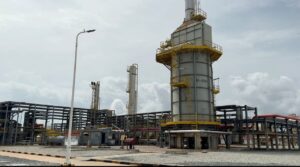
She further explained that the Gas Processing Plant, constructed by SINOPEC in collaboration with Canada’s Thermo Design Engineering Ltd. (TDE), also produces Condensate (Naphtha), which serves as a blend stock to produce premix fuel used by fishermen. This initiative, she said, has reduced premix fuel costs and government subsidy expenditures by more than 60 percent.
Addressing the importance of regional energy integration, Ms. Blay highlighted Ghana Gas’ strategic partnership with the West African Gas Pipeline Company (WAGP). Through an interconnection at Ghana’s gas supply hub in Takoradi, the partnership facilitates reverse gas flow to Tema, the country’s key industrial and thermal power generation centre.
She explained that the successful integration of Ghana Gas’ infrastructure with the West African Gas Pipeline in 2018 enabled bidirectional gas transmission, transforming Ghana from a terminal gas-importing destination into an active participant in the regional gas transmission market.
Beyond the WAGP interconnection, Ms. Blay disclosed that Ghana Gas is also a stakeholder in the proposed African Atlantic Gas Pipeline project, which is expected to connect Nigeria and Morocco with several African countries, including Ghana.
Under the initiative, Ghana Gas is expected to provide pipeline interconnections and compression stations, creating significant investment opportunities and enhancing energy trade between Africa and Europe.
The Ghana Gas CEO emphasized that Liquefied Natural Gas (LNG) remains a critical component of the country’s long-term energy security strategy.
She stated that future LNG investments would be guided by commercial viability, affordability, and the need to maintain stable electricity tariffs for consumers. Ghana, she noted, has already invested in LNG regasification infrastructure and terminal facilities and is prepared to receive LNG imports when market conditions become economically favourable, particularly with respect to pricing and payment arrangements.
Highlighting future growth plans, Ms. Blay announced that Ghana Gas is preparing for a major expansion phase and invited investors to participate in several strategic projects. Key among these are:
· The construction of a Second Gas Processing Plant (GPP II)
· The development of a 300-kilometer onshore gas transmission pipeline
· The Pentane Monetization Project
She noted that while the existing Gas Processing Plant has successfully supported Ghana’s energy needs, increasing demand necessitates additional processing capacity. The proposed onshore transmission pipeline is expected to connect major industrial zones and natural resource corridors, further strengthening the country’s energy infrastructure.
She further announced that, unlike most gas processing facilities where pentane is flared, Ghana Gas is working assiduously to eliminate the flaring of large volumes of hydrocarbons naturally associated with gas processing by investing in stabilization and conditioning technology to stabilize the volatile hydrocarbons for safe market disposal. This, she said, will be a game-changer and align with the company’s ESG principles.
Ms. Blay expressed confidence in Ghana’s attractiveness as an investment destination, citing the country’s strong legal framework, independent judiciary, competitive and deregulated market environment, and stable exchange rate and investment climate.
She stressed that Ghana’s strategic geographic location positions it to become a major transit and aggregation hub within the regional gas value chain. She also assured investors that Ghana’s long-standing respect for property rights and absence of expropriation risks provide a secure environment for long-term investments.
Concluding her address, Ms. Blay reaffirmed Ghana Gas’ commitment to supporting Ghana’s energy security, industrial development, and regional energy transformation agenda.
She emphasized that through continued investments in transmission infrastructure, regional partnerships, and future LNG capabilities, Ghana Gas is positioning itself as both Ghana’s national energy champion and a strategic gas transmission hub for West Africa.
“Ghana Gas is committed to creating value for investors while advancing Ghana’s energy security and strengthening regional energy integration across West Africa,” she stated.
By Ebenezer Atiemo